Selected work
Cyber Rush — VR Shooter Game
An immersive VR shooter built end-to-end to show a complete game-development pipeline: players fight through waves of AI bots in a neon-lit arena, unlocking mid-game power-ups that add strategic depth as the pace ramps up.
Every environment and prop was modelled in Blender around a sleek, futuristic look that matches the high-energy combat, then brought into Unity with responsive VR controls, tuned enemy AI, and stable performance.
Tech stack
AR Bermuda Triangle
An interactive AR experience built around the disappearance of the USS Cyclops. Scanning a real-world map with a phone unlocks a 3D visualisation of the Bermuda Triangle — islands, ships, UFOs, and ocean effects layered over the physical table.
- Image tracking — 3D models follow the scanned map's position in real time.
- Raycasting — touch and keyboard controls let users pilot the virtual ship through the scene.
- Light estimation — scene lighting adapts to the room, and ship lights switch on automatically in low light.
- Photogrammetry — a physical toy ship was scanned with Polycam and rebuilt as a realistic 3D model.
- Animation & audio — animated UFO abductions, whirlpools, smoke and storms, layered with radio static, waves, and weather sound design.
Getting here meant testing several photogrammetry pipelines before settling on one that held detail, and weighing Vuforia against AR Foundation to get light estimation and tracking working together. The result combines AR engineering with narrative and UI design — a glassmorphism interface and custom logo tie the storytelling together.
Tech stack
Non-Visual XR: Haptic Navigation
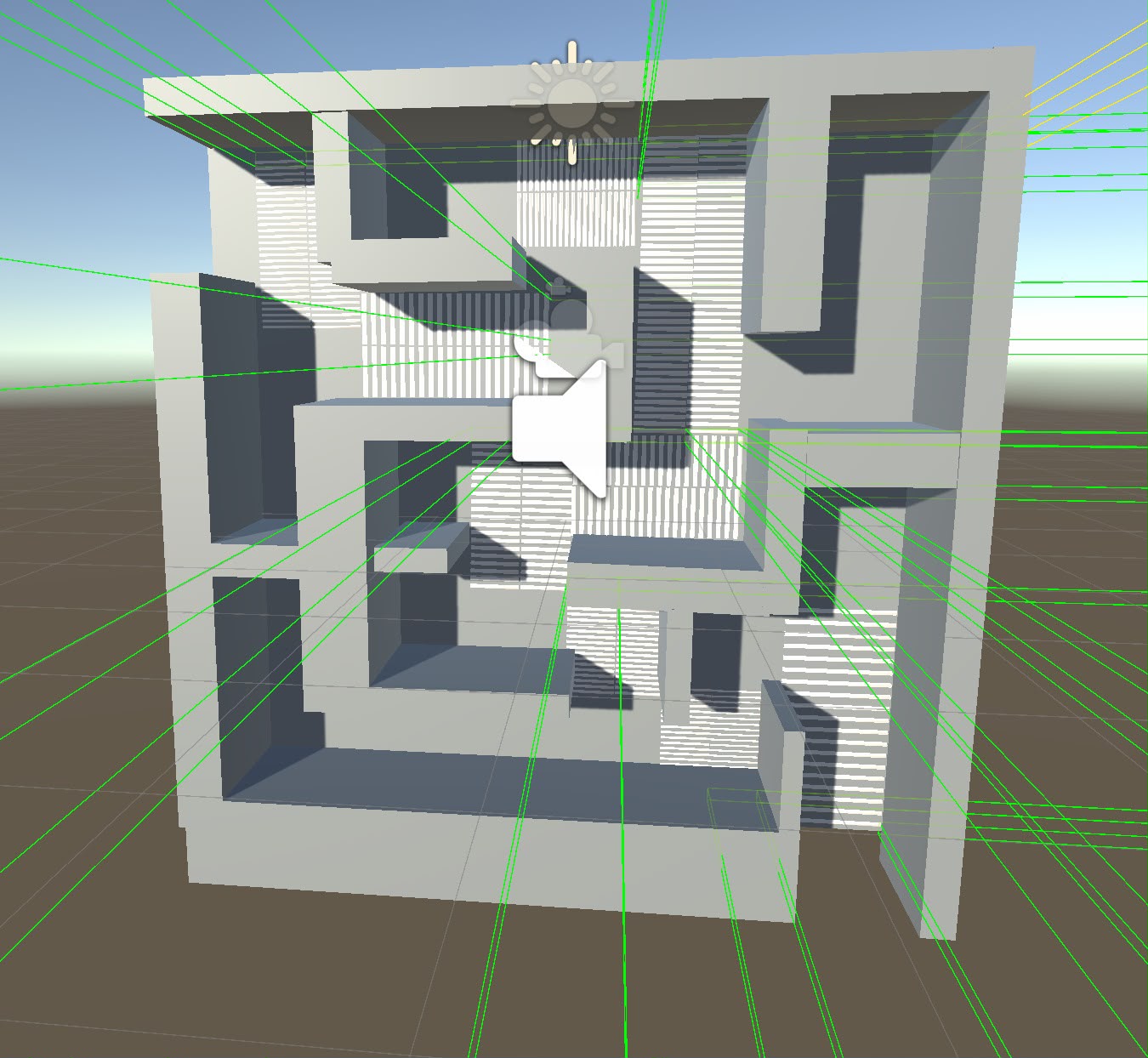
A collaborative MSc project exploring non-visual interaction: pairing 6-DOF haptic feedback (Senmag 9D stylus) with spatial audio (Wwise) to build an inclusive XR environment — a navigable "Hospital Maze" — for blind and visually impaired users.
My role — Lead Technician & Programmer
- Integrated the Senmag 9D haptic stylus into Unity's XR rig.
- Built procedural tactile surfaces and runtime object-swapping for real-time haptic feedback.
- Designed physics-based interactions simulating realistic textures, inertia, and friction.
- Built the Hospital Maze scene and procedural maze navigation using spatial sound and haptic cues.
Core contributions
- Procedural mesh generation for precise haptic fidelity.
- An in-Unity analytics tool logging collisions, navigation time, and accuracy.
- Allocentric navigation models that improved blind users' spatial-task performance.
- Wwise integration for synchronised haptic–audio feedback.
- Usability testing with visually impaired participants, who navigated more efficiently than sighted users in non-visual conditions.
Tech stack
Clone Composite Shot
A composition study built around a single 360° take: the same two people appear multiple times as clones within one continuous frame. Captured on an Insta360 camera and assembled in DaVinci Resolve, the piece is an exercise in multi-pass shooting, masking, and seamless blending to hold several performances of the same actors together in one shot.
Tech stack
Long Bar VR — Scanned Environment
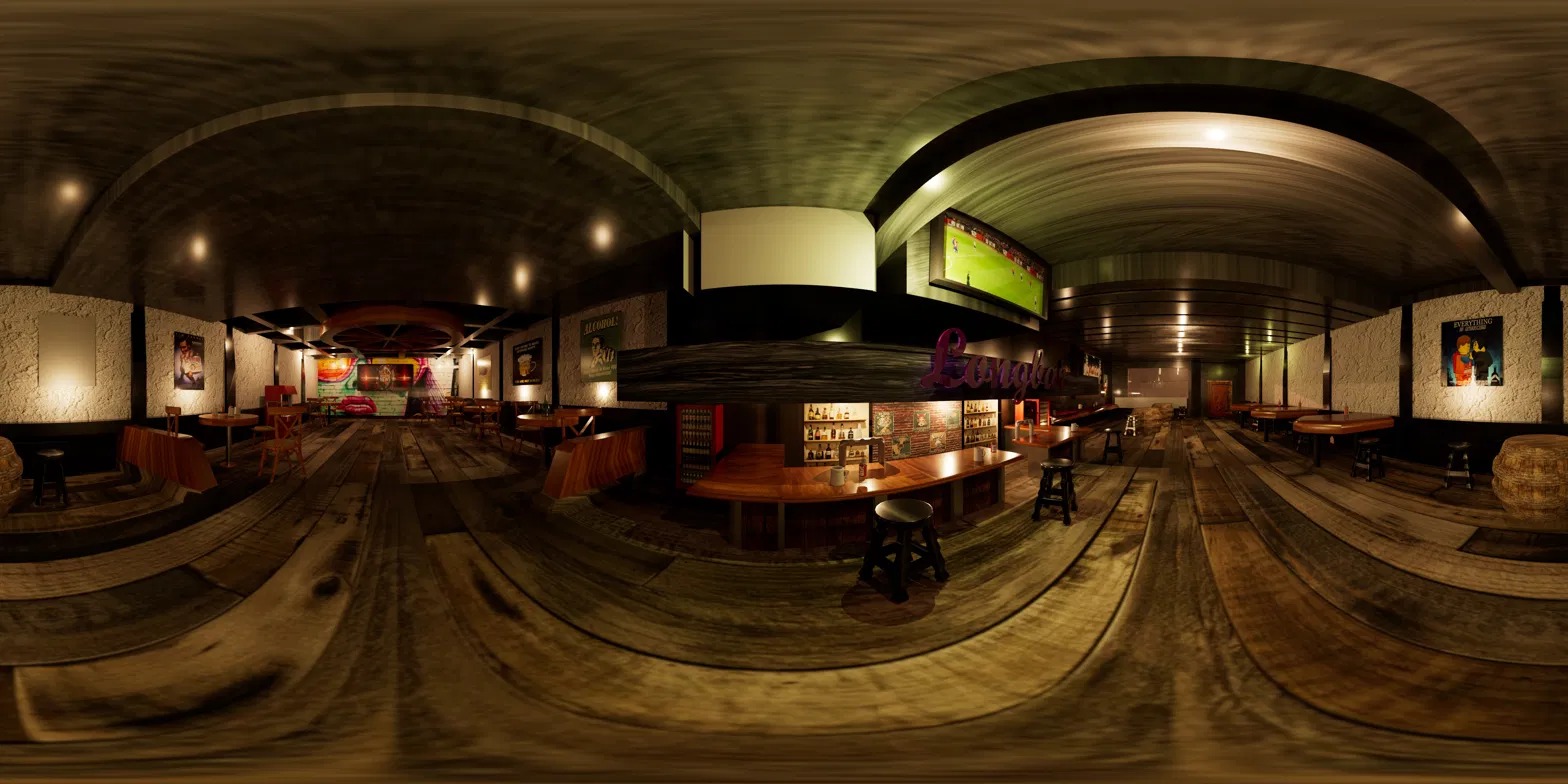
A full 3D scan and rebuild of the Long Bar, a real pub in Bristol, recreated as an explorable VR environment. The entire space was scanned and reconstructed as a 3D model in Maya, down to the layout of the bar counter, seating, and signage, then set up for a VR walkthrough.
Tech stack